Know who will stay before day one.
Interviews measure how well someone rehearses. References tell you about the past. Neither measures whether they'll actually stay. Our behavioural survey captures genuine commitment signals — the ones that actually predict retention.
+105%
13 week sustained employment outcomes
n = 9,500 participants. Disability employment with Employment Services Queensland and Job Futures.
Validated across 250,000+ participants and applied with governments in four countries.
The Queensland Government's Chief Scientist called his work “profound.”
Lord Freud, the former UK Minister for Welfare Reform, described it as “game changing.”
A bad hire doesn't show up in the interview.
It shows up six months later — when the role's empty again, the team is demoralised, and you're starting the recruitment process over.
You already filter for skills. You already filter for fit. You already run reference checks, right-to-work checks, police checks. But none of that predicts whether a candidate is actually ready to show up, stay, and do the work.
That's the signal your current process is missing — and it's the one that costs you the most when you get it wrong. Not because they couldn't do the job. Because they were never genuinely committed to doing it.
“Most hiring failures aren't skill failures. They're commitment failures.”
46%
of new hires fail within 18 months.
Leadership IQ — study of 20,000 hiring managers.
89%
of those failures are about attitude and commitment — not skills.
Leadership IQ, same study.
30%
of first-year salary — the average cost of each failed hire.
U.S. Department of Labor estimate for replacement cost per failed hire.
3.5 minutes. Five risk tiers. One clear signal.
Candidates complete a short, mobile-first behavioural survey as part of your standard hiring process. Each candidate is classified across a five-tier commitment spectrum: Committed, Willing, Flaky, High Risk, or Inauthentic. Your team sees clear risk scores alongside their existing hiring criteria — no extra workflow, no ambiguity.
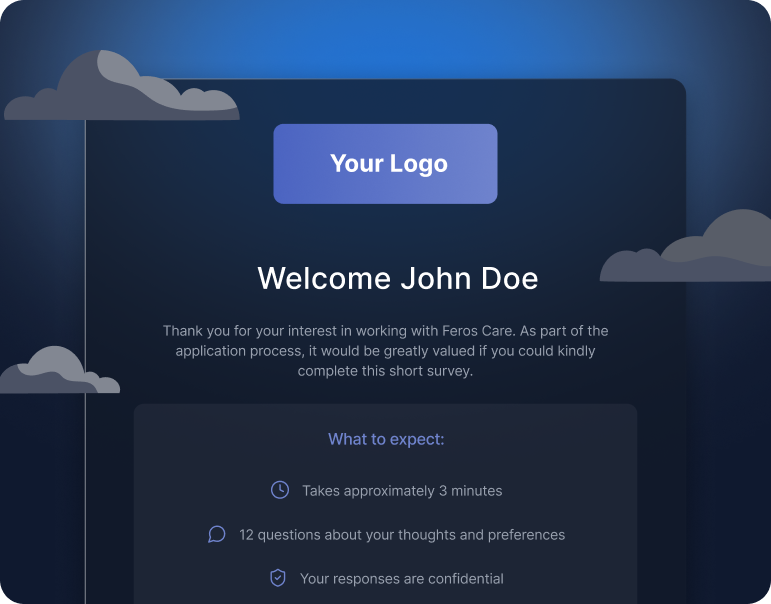
Measure. Predict. Prescribe.
Survey
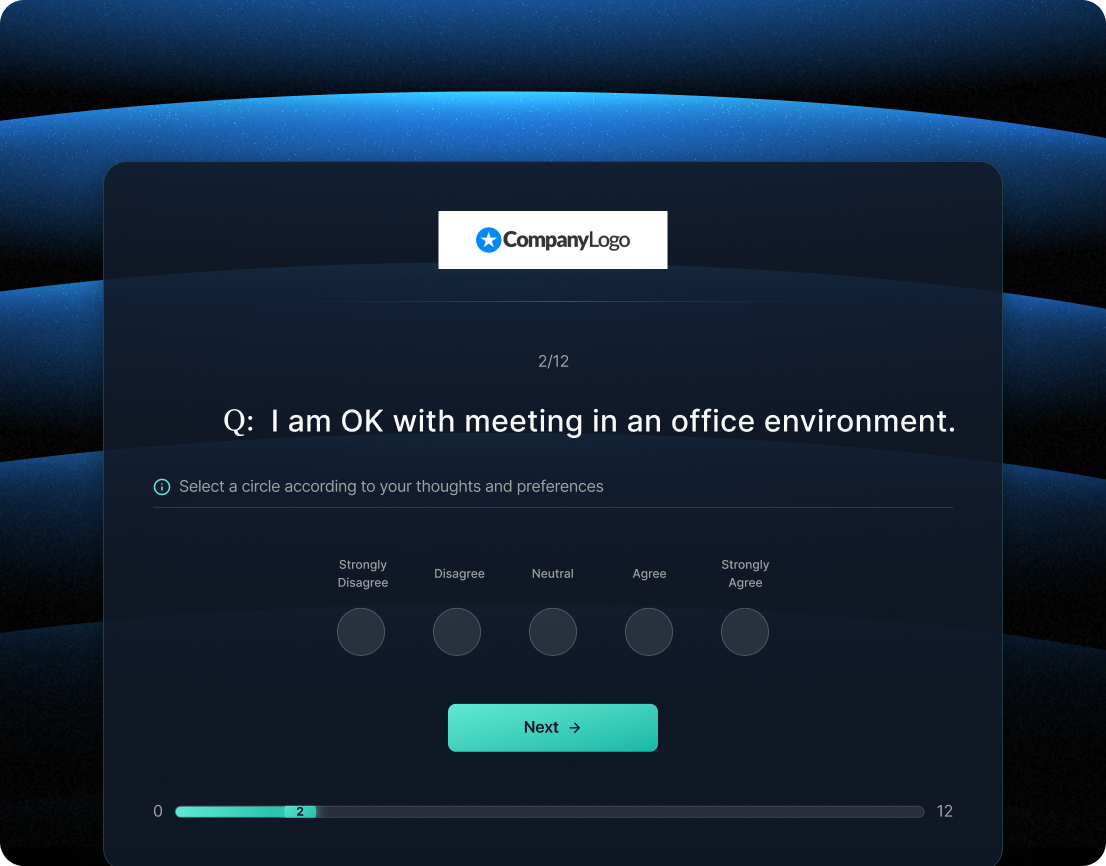
Candidates complete a 3.5-minute mobile-first behavioural survey as part of your recruitment process. No login, no app download, no disruption to your existing workflow.
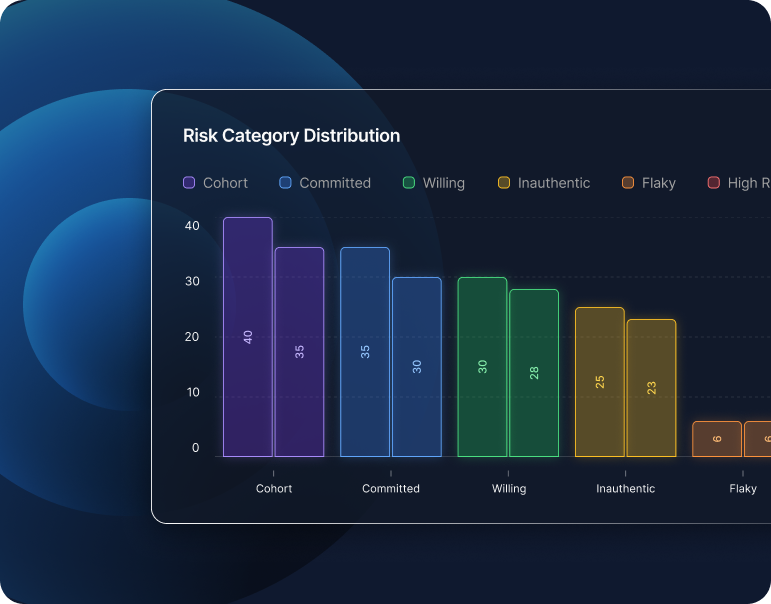
Classify
Our algorithm places each candidate on a five-tier commitment spectrum. Each tier carries a different retention risk — and a different recommended response.
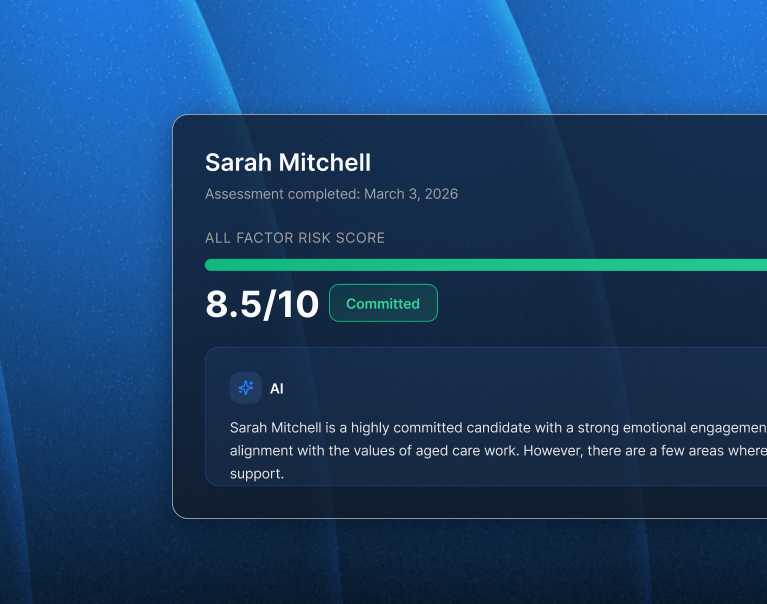
Prescribe
HR teams see clear risk classifications and AI-generated prescriptions alongside their existing hiring criteria. Managers get specific actions — not raw scores to interpret.
Every tool your recruitment team needs
From a 3.5-minute candidate survey through to outcome tracking at 3, 6, and 12 months — ethyx fits into your existing process and gets more accurate over time.

Quick for candidates

Mobile-First Survey
Candidates complete it anywhere, on any device. No login, no app download.

Likert-scale design

Manager Prescriptions
Managers receive specific, actionable recommendations — not generic advice. Tailored to each person's behavioural profile.
Academically proven

Committed to Inauthentic

Global evidence based

ATS Integration
Candidates complete it anywhere, on any device. No login, no app download.
Risk-free deployment

Proven financial impact
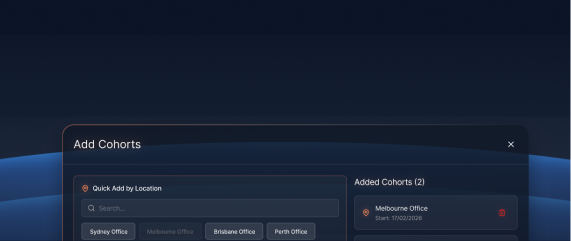
Campaign Management
Track cohorts, compare results, and measure outcomes at 3, 6, and 12 months.

AI-Powered Insights
Machine learning models that get more accurate as they learn your organisation's patterns.
Built on science, not opinion
This isn't another HR tool built by software engineers. It's grounded in 25 years of behavioural science research, validated across government programs in four countries, and published in peer-reviewed journals.
Peer-reviewed research
Published in the Journal of Rehabilitation and grounded in validated psychometric frameworks.
Four countries validated
Applied across government programs internationally. Not just theory, proven at scale.
PhD-led behavioural science
Founded by Dr Darren Coppin, 25 years in what predicts human commitment and action.
Product-led by practitioners
Devon Passmore brings a decade across SaaS, HR tech, and regulated industries.
“Interviews, recruiters, and ATS platforms have gotten very good at determining fit. But fit and commitment aren't the same thing, and nobody's measuring the one that actually predicts whether someone stays.”
Want to understand exactly how this works and how it's different from the psychometric tests you already know?
Explore the researchPsychometrics measure fit. OPUS measures commitment.
Every conversation we have starts the same way: "is this like Myers-Briggs? Is this like DISC? Is this like the Big Five?" Those are good instruments — they genuinely measure personality, preference and trait-level fit. But fit isn't the same thing as commitment, and that distinction is the whole reason OPUS exists.
Someone who isn't a textbook fit for a role can still show up every shift for three years. Someone who looks like a perfect fit on paper can ghost you in the first fortnight. OPUS measures the thing that actually predicts whether they'll stay — genuine psychological readiness to commit — not theoretical fit.
Personality tests
Myers-Briggs, DISC, Big Five
OPUS
ethyxBehavioural commitment survey
Predicts whether someone will stay
Predicts trait fit — not whether they'll show up next month.
Directly validated against 13-week sustained employment outcomes across 24,000+ jobseekers.
Measures genuine commitment to the role
Measures who someone is, not their readiness to commit to this specific role right now.
Captures point-in-time psychological readiness using the Transtheoretical Model of Change.
Classification changes over time
Traits are framed as stable — and labels tend to stick in the recruiter's head.
Readiness is a point-in-time state. A High Risk candidate today can become Committed.
Validated on real employment outcome data
Validated for trait consistency — not against whether people actually stayed in their roles.
Four PhD studies, 24,000+ jobseekers. Continuously calibrated on 250,000+ live employees.
Fair Work Act & APP compliant
Varies by tool. Tests touching on protected traits need careful legal framing.
Scoped to work-readiness only. Not personality, not character, not protected attributes.
Improves with your organisation's data
Static instruments — results don't learn from your hiring or retention outcomes.
ML layer continuously adapts to your organisation's patterns and validates against outcomes.
Peer-reviewed academic foundation
Decades of factor-analytic personality research. Well-established, well-validated science.
Published in the Journal of Rehabilitation. Built on 40+ years of TTM peer-review.
We're not anti-psychometric. A good psychometric alongside OPUS is a stronger hiring stack than either on its own — one tells you about trait-level fit, the other tells you whether the person is actually going to turn up.
Built on the Transtheoretical Model of Change
The TTM was developed by Prochaska and DiClemente in the late 1970s to understand how people actually change behaviour — not in theory, but in practice. Over the last four decades it has become one of the most rigorously validated behavioural-science frameworks in existence, with peer-reviewed application in smoking cessation, addiction recovery, chronic-disease self-management, and public-health intervention design.
Dr Darren Coppin adapted the TTM for employment commitment as the core of his PhD research — the first time the framework had been operationalised for jobseeking and retention. His Study I tested the adapted instrument on 1,247 unemployed Australians and established, for the first time, that different stages of genuine commitment to jobseeking exist and that they predict sustained employment outcomes. A later RCT extended the work to 20,057 jobseekers, and Dr Coppin has since run the instrument across more than 250,000 employees in operational deployments — the dataset OPUS is calibrated on today.
That PhD research also surfaced a genuinely new stage of change — Inauthentic Action — developed in collaboration with Dr Janice Prochaska and Dr Deborah Levesque at Pro-Change Behaviour Systems. It doesn't appear in the original clinical TTM. It exists in OPUS because it turned out to be the single most important signal in employment contexts: the stage that catches the candidate who's going through the motions of jobseeking without any genuine intent behind it.
Stage 05
Precontemplation
Not considering change
Stage 04
Contemplation
Aware but ambivalent
Stage 03
Inauthentic Action
Going through the motions without genuine intent
Coppin addition · employment-specificStage 02
Preparation
Genuine intent forming
Stage 01
Action
Psychologically ready
Stages 05 → 01. Classification is point-in-time — readiness changes.
What is churn actually costing you?
Most organisations underestimate the real cost. Enter hires per month and adjust the sliders to see what churn looks like at your scale, and what a 10% reduction could save.
Annual figures below use 204 hires/year (17 × 12).
Among ethyx customers, average annual churn before implementing the platform is around 50%. Adjust to match your organisation.
Industry avg ~$4,700 (SHRM). Includes job ads, recruiter time, agency fees, onboarding.
Total annual cost of churn
$2,136,900
Replacement + recruitment combined
Employees lost per year
102
Replacement cost
$1,657,500
~25% of salary × employees lost
Wasted recruitment spend
$479,400
Cost to re-hire each lost employee
With 10% churn reduction
$213,690
Potential annual savings
Projected ROI with ethyx
11x+
Estimated return on investment
Replacement cost: 25% of annual salary (Deloitte). Recruitment cost: default $4,700 per hire (SHRM 2022). Actual results vary by industry and role. Projected ROI multiples compare potential annual savings to a typical ethyx engagement cost of $20,000.
We put our money where our model is
We don't ask you to take our word for it. We ask you to hold us to it.
100% ROI guarantee, or we return your investment
We can make this promise because our models are evidence-based and continuously improving. We don't guess, we measure. If we don't deliver the return, you don't pay.
Secure & Compliant
Fair Work Act aligned, compliant with the Australian Privacy Principles, consent-first data collection, and independently security tested. Built for the standards you have to meet.
The questions we get in every first conversation.
Psychometrics are good tools — they genuinely measure personality, trait and preference. But they measure fit, which is a theoretical prediction about suitability. OPUS measures commitment, which is an empirical prediction about whether someone will actually stay. A perfect-fit candidate can still ghost you. A less-than-perfect-fit candidate can still deliver three solid years. The two instruments answer different questions, and the strongest hiring stacks use both.
The Transtheoretical Model measures internal consistency across dozens of signals. There's no right answer to pattern-match. The Inauthentic Action stage specifically catches candidates who are presenting positively on the surface but whose underlying responses are inconsistent. It's not a perfect filter — nothing is — but it's substantially harder to game than a resume, a structured interview, or a conventional personality test.
Yes. OPUS is scoped strictly to work-readiness and commitment — not personality, not character, not protected characteristics. Data collection is consent-first, retention is minimised, and every decision is logged against a defensible rationale. Detailed compliance documentation is available under NDA.
Most clients are live in two to three weeks. Week one is OPUS configuration and integration with your ATS. Week two is a pilot on a defined role type. Week three is rollout and recruiter training. You don't replace your process — you add one step to it.
ethyx is one input, not the whole decision. Your recruiters and hiring managers can, and should, override it when other evidence warrants. The platform captures the override and the reasoning, which strengthens your audit trail. Over time, overrides are fed back into calibration.
No. A single recruiter can run ethyx for a 200-hire-per-year pipeline. The survey is self-serve for candidates, the dashboard is built for busy humans, and the hiring decision stays exactly where it is today — with your team.
Engagements are priced per role family and hiring volume, not per seat. Most care-sector clients land inside the cost of a single failed hire — meaning the product pays for itself if it prevents even one bad placement in the year.
Let's see if this fits your situation
No pitch. No pressure. We'll review your details and get back within 24 hours with an honest view of whether we can help.
Stop making expensive hires that don't stick.
Book a free initial chat. No pressure. No free trials. Just real insights and honest conversations.
Contact Us